
When planning a major project, whether it’s a mine site deep in the Pilbara, a roadworks site in regional WA, or a large-scale infrastructure build in a remote location, choosing between portable accommodation camps and traditional rental housing is a strategic decision. More than just housing for your workforce, choosing between one of the two can actually affect your budget, timeline and operational efficiency.
At Mobile Camps Australia, we specialise in delivering modular, portable accommodation tailored to the demands of Australia’s toughest projects. Through years of experience in mining, construction and remote workforce housing, we’ve seen firsthand how the right accommodation solution can transform how you mobilise and manage your team.
Portable Accommodation Camps vs Rental Housing: What are they?
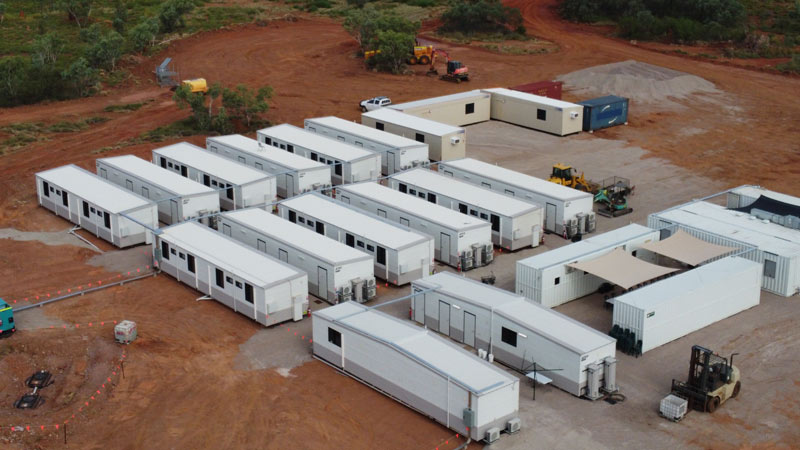
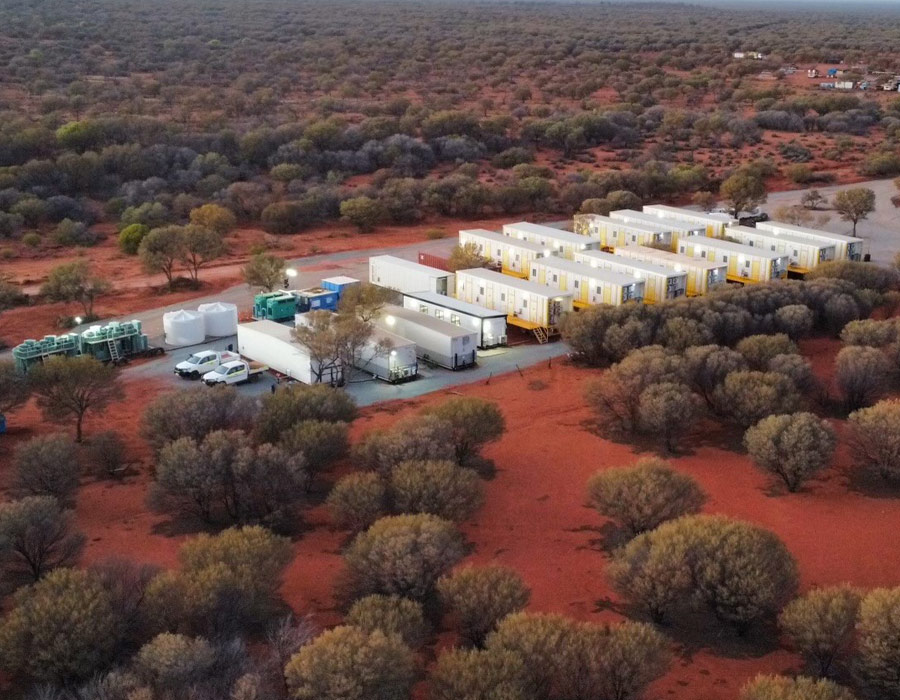
Portable accommodation camps are modular, relocatable housing solutions designed specifically for dynamic work sites. They’re purpose-built to be delivered, installed and operational in days rather than months. Flexible and versatile, units can serve multiple purposes and can be scaled up or down to suit workforce numbers. Portable accommodation camps include a mix of accommodation units, communal facilities, site offices, kitchens, ablutions, laundries and more. All are engineered to withstand the harsh Australian climate and remote site conditions.
Rental housing, by contrast, relies on sourcing existing properties within nearby towns or regional centres. This may include houses, apartments or worker lodgings leased through real estate agents or private arrangements. In metropolitan or well-established regional locations, this approach can provide convenient access to community infrastructure and amenities. However, rental housing depends heavily on local availability. In many regional and remote parts of Australia, housing supply is limited, competitive and often unsuitable for large or rapidly mobilising workforces. Securing multiple properties simultaneously can create delays, while ongoing lease commitments may reduce flexibility as project needs evolve.
Portable Accommodation Camps vs. Rental Housing: differences and benefits
While both portable accommodation camps and rental housing provide benefits, it is important to understand how they each work to find out which one could be the best suited for your project.
Location and Accessibility
For projects operating in remote or semi-remote locations, proximity to site is often the defining factor. Portable accommodation camps eliminate the need for daily commuting. By positioning accommodation directly onsite or adjacent to operations, teams reduce travel time, minimise fatigue and increase productive hours. Workers can transition seamlessly between shifts and rest, supporting both efficiency and wellbeing.
Rental housing, on the other hand, is limited to existing residential areas. This may require daily transport to and from site, introducing logistical complexity and added cost. In some cases, projects must rely on fly-in, fly-out arrangements, increasing travel expenditure and compressing available work hours. Over time, commuting and transport coordination can impact both morale and productivity.
Scalability and Project Flexibility
Most major projects do not maintain static workforce numbers. Construction phases, peak activity periods and staged development all require accommodation solutions that adapt quickly. Portable accommodation camps are inherently modular, meaning additional units can be deployed as workforce numbers increase, and demobilised as activity scales down. This flexibility allows project managers to respond to operational demands without being locked into long-term commitments.
Rental housing does not offer the same agility. Securing additional properties can be slow and unpredictable, particularly in tight regional markets. When workforce numbers decrease, existing leases may still need to be honoured, limiting financial flexibility. For projects operating on strict budgets and timelines, this rigidity can create unnecessary pressure.
Speed of Deployment
Mobilisation speed is often critical in mining, infrastructure and civil works. Portable accommodation camps are designed for rapid deployment. Units are transported to site, installed efficiently and made operational in a fraction of the time required to construct permanent facilities.
In contrast, organising rental housing involves property searches, lease negotiations, inspections and administrative processes. When multiple dwellings are required, coordination becomes increasingly complex. For fast-moving projects or emergency works, this delay can hinder early progress.
Workforce Wellbeing and Team Culture
Accommodation plays a significant role in workforce satisfaction. Portable accommodation camps are designed with worker comfort in mind, incorporating private sleeping quarters alongside shared dining and recreational spaces. This structure fosters team cohesion while still providing individual privacy. Onsite facilities such as kitchens, laundries and communal areas support a self-contained, structured living environment that aligns with project routines.
Rental housing can offer familiar residential comforts, but it often disperses teams across different locations. This separation may reduce opportunities for team interaction and create logistical challenges in coordinating shifts and transport. Additionally, commuting reduces downtime for rest and recovery, which can affect morale over extended rotations.
Cost and Operational Efficiency
When evaluating costs, project managers must consider more than weekly rental rates. Portable accommodation camps consolidate accommodation into a single, controlled environment. Transport costs are reduced, commuting is eliminated and operational oversight becomes simpler. Flexible hire models allow companies to pay for what they need, when they need it.
Rental housing introduces additional variables, including transport allowances, vehicle requirements, fluctuating market rents and utility costs. In high-demand regions, rental prices can rise quickly, placing pressure on project budgets. For remote projects in particular, the total cost of rental housing often exceeds the investment in a dedicated portable camp solution.
Compliance and Safety
Safety is central to every successful project. Portable accommodation camps are designed to meet Australian standards and industry requirements, ensuring facilities align with workplace health and safety expectations. Centralised accommodation simplifies oversight, site inductions and compliance management.
With rental housing, safety responsibilities extend beyond the site boundary. Managing transport risks, property compliance and varying residential standards introduces additional administrative complexity. For industries where safety performance is closely monitored, streamlined accommodation solutions offer greater control.
Ultimately, the decision between portable accommodation camps and rental housing depends on your project’s location, scale and timeline. For remote and dynamic projects in Australia that require speed, flexibility, control and onsite efficiency, portable accommodation camps provide a purpose-built solution that supports productivity from day one.
Mobile Camps Australia: Portable Accommodation Designed to Suit Your Project
At Mobile Camps Australia, we deliver complete portable accommodation solutions tailored to your site requirements. Whether you require a single unit or a fully serviced camp featuring kitchens, dining halls, ablutions, site offices and recreational facilities, our team has the experience and capability to support projects of any scale across Australia.
Our years of experience have taught versatility and flexibility is central to mining, oil and gas or construction projects, that’s why each of our accommodation configurations is customisable to work around your workforce size and operational needs. Moreover, we understand how your needs can evolve rapidly on the field. That is why, we ensure our solutions can be deployed rapidly to help you maintain momentum and protect project timelines.
Our site solutions and rental packages are also made to suit your preferences. Our dry hire option is perfect for those who prefer to manage setup and operations independently whereas our for those seeking support in supplying and installing camp our dry hire + install package might be better suited. For clients seeking a complete end-to-end solution, our turnkey service covers delivery, installation and dismantling, allowing you to focus entirely on project delivery while we handle the accommodation logistics.
All of our units are built for Australian conditions, engineered to withstand the challenges of remote and extreme environments. Durable construction, weather-resistant materials and practical layouts ensure long-term reliability, comfort and compliance, even in the harshest settings.
At every stage, our focus remains the same: delivering accommodation that supports your workforce, strengthens operational efficiency and keeps your project moving forward.